A Sleep Tool For People With
Sleep Apnoea Risk
Timeline: August 2023 - April 2024
Role: UX Research, UX/UI Design
Background
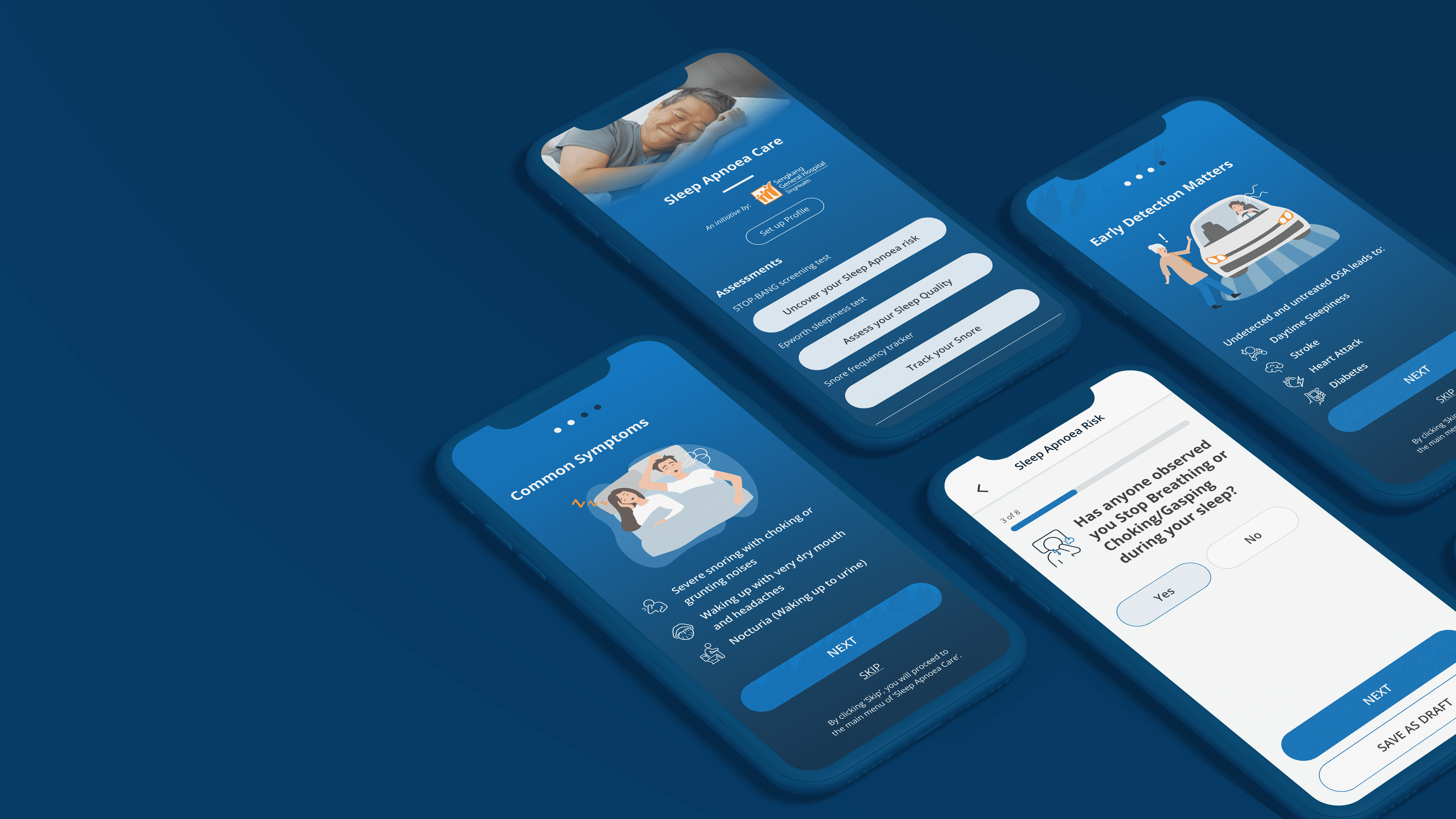
The Health Buddy team was approached by Sengkang General Hospital’s Sleep department seeking to design a tool that aids users to discover their Sleep Apnoea risk and to provide management of one’s sleep health for current diagnosed patients.
To better understand the subject matter, our team employed research methods in the design process whilst working alongside clinicians’ requirements to design ‘Sleep Apnoea Care’.
Key findings from desk research
Secondary research was done through credible health web sources on the topic of Sleep Apnoea; after which key findings were extracted.
“1 of 3 adult Singaporeans may suffer from moderate to
severe Sleep Apnoea, majority being undiagnosed and untreated.”
User types
Based on the extracted desk research, 2 main persona user types were created: Undiagnosed and Diagnosed with Sleep Apnoea.
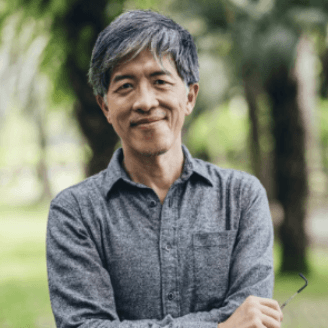
Undiagnosed User Type
Ng Kok How, 48, Male
Heavy smoker
High Cholesterol, High Blood Pressure
Goal:
"I aim to self-diagnose Sleep Apnoea before consulting a doctor. Understanding my health is vital and empowers me to make informed health decisions."
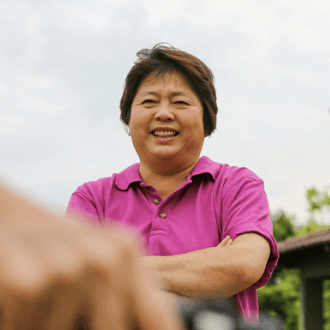
Diagnosed User Type #1
Low Ai Ling, 58, Female
Retiree taking care of elderly parent
Obese, Menopause
Goal:
"I am determined to improve my sleep by losing weight through the Sleep exercises that my doctors asks me to do."
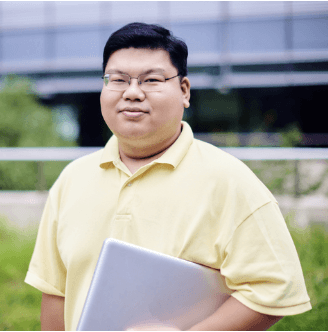
Diagnosed User Type #2
Caleb Yeo, 35, Male
Computer engineer
Obese
Goal:
"I am dedicated to educate myself about Sleep Apnoea through personal research. I am working closely with my doctor to improve my condition."
Design inspiration from other 'Sleep-related' applications
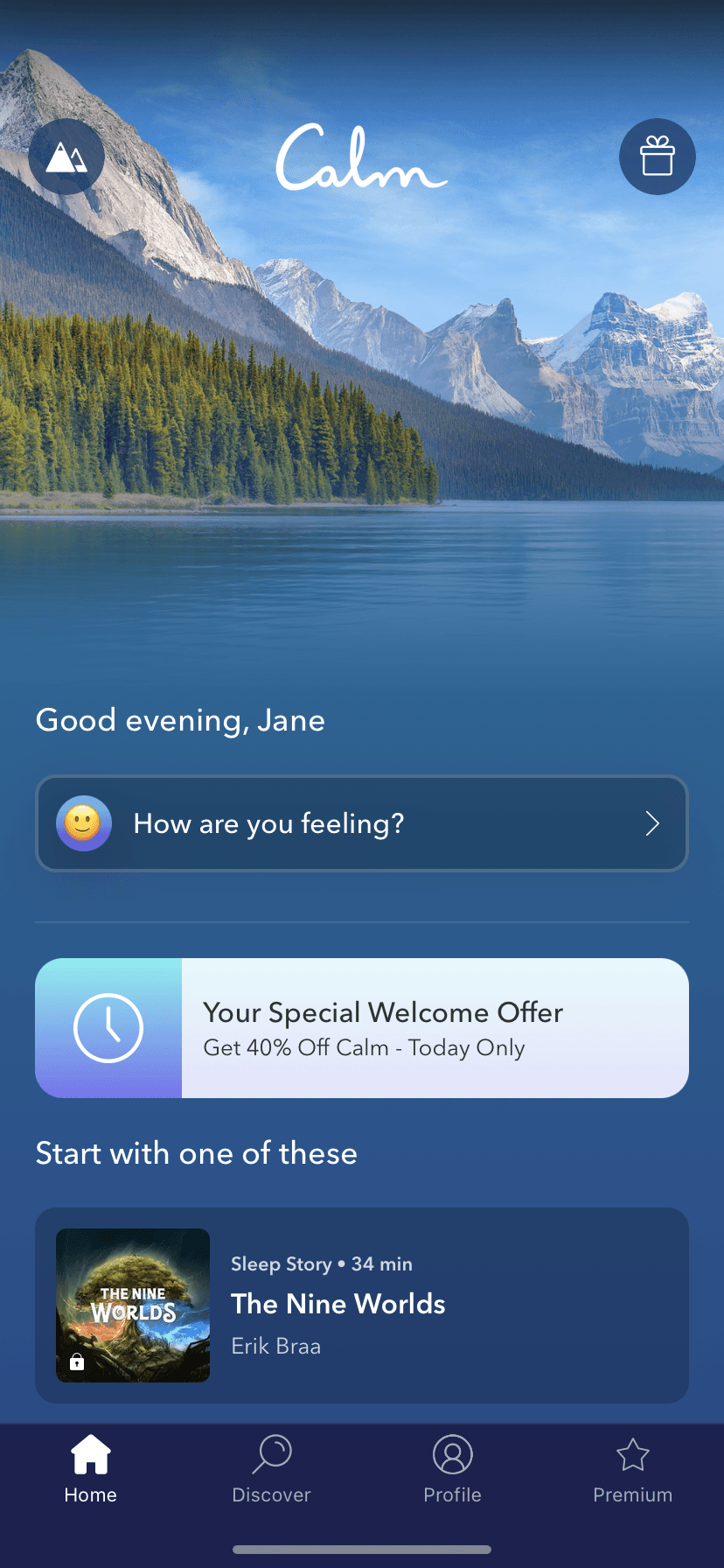
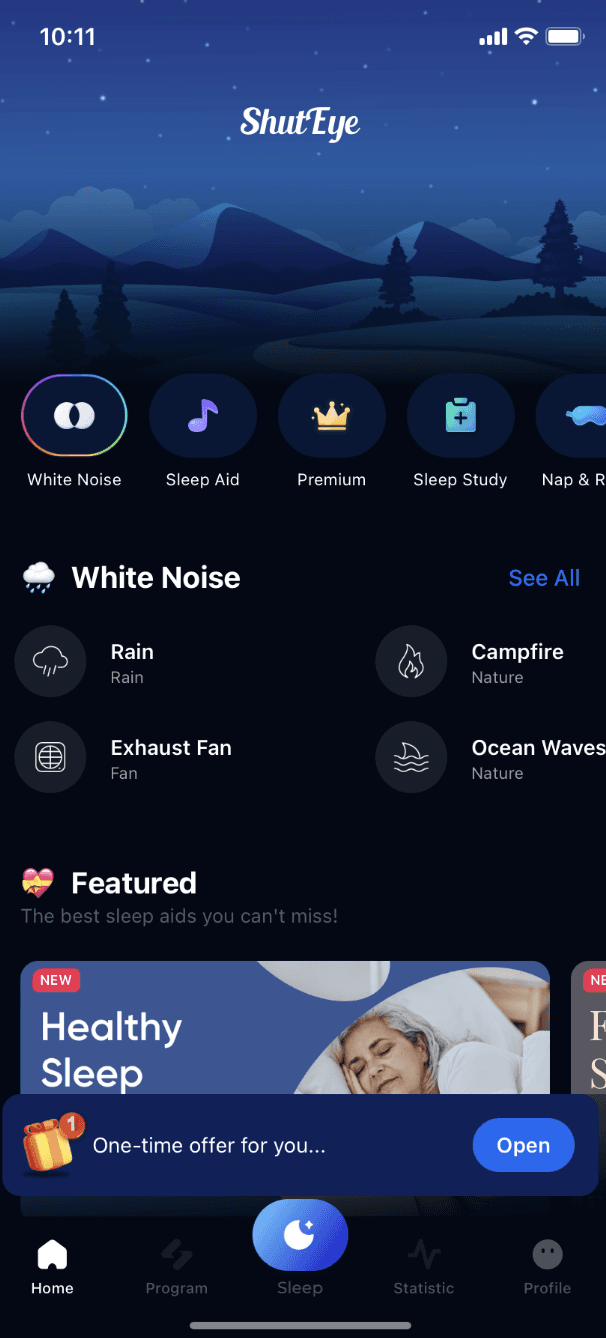
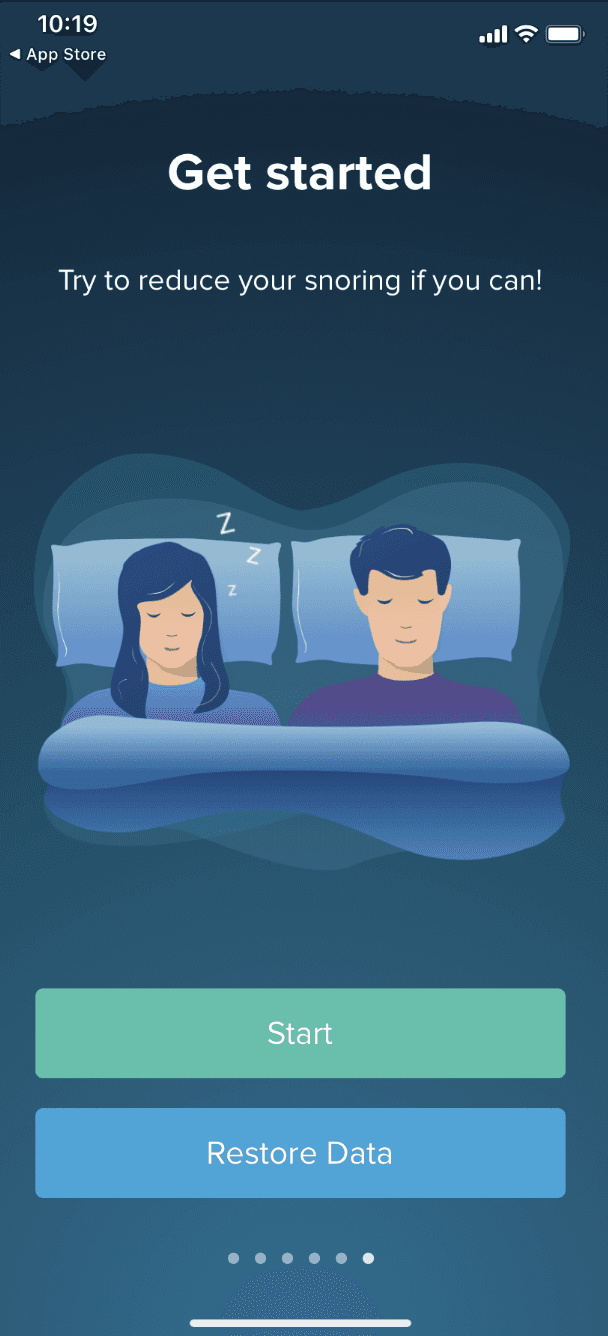
The team looked into other Sleep-related applications with high ratings on app store, such as 'Calm', 'ShutEye' and 'SnoreLab' to identify common design patterns that served as design inspiration.
We gathered that most applications used illustrations to create a dream-like aesthetic and used reverse white text against dark backgrounds to create the 'sleep aesthetic'.
Calm
Use of 'Freedom aesthetics' allowing users to choose animated scenes
Reverse white text against blue gradient for contrast
Opacity for button styles for transient aesthetics
ShutEye
Use of illustrations with minimal animations
Reverse white text against blue or black background for contrast
Use of round buttons, outlined and filled icons
SnoreLab
Use illustrations with opacity to create dream-like aesthetic
Reverse white text against blue gradient for contrast
Use of round buttons with outlined icons
Usability testing (onboarding and questionnaire flow)
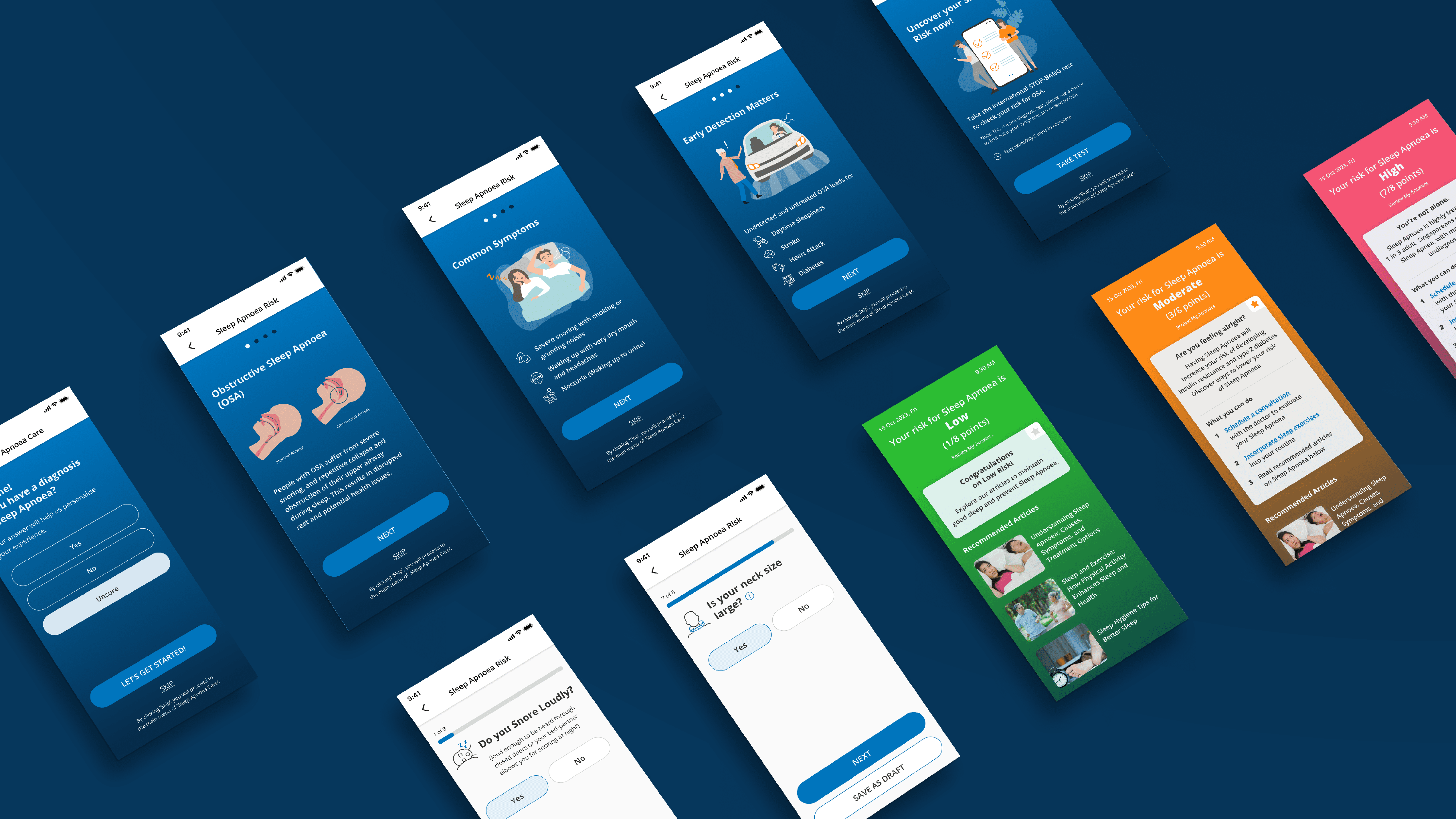
Once the initial designs were crafted, the team conducted a usability test with 10 users (age 35-52 years old) to find out if questions asked in the Sleep Apnoea risk test was clear and if there were any improvements needed.

1) Users found that the initial illustrations and questions asked were not gender neutral but male biased. In the next iteration, we ensured that we used both male and female in illustrations.
2) Users found that the onboarding information, symptoms listed and questions were brief and not persuasive for someone to book a doctor consultation. In the next iteration, we edited the copy to be more symptom specific and used point form to make content digestible.
Usability testing (advisory results screen)
There is an assumption that senior users prefer black text due to better readability, thus we want to find out the susceptibility of reverse white designs, while not compromising on contrast.
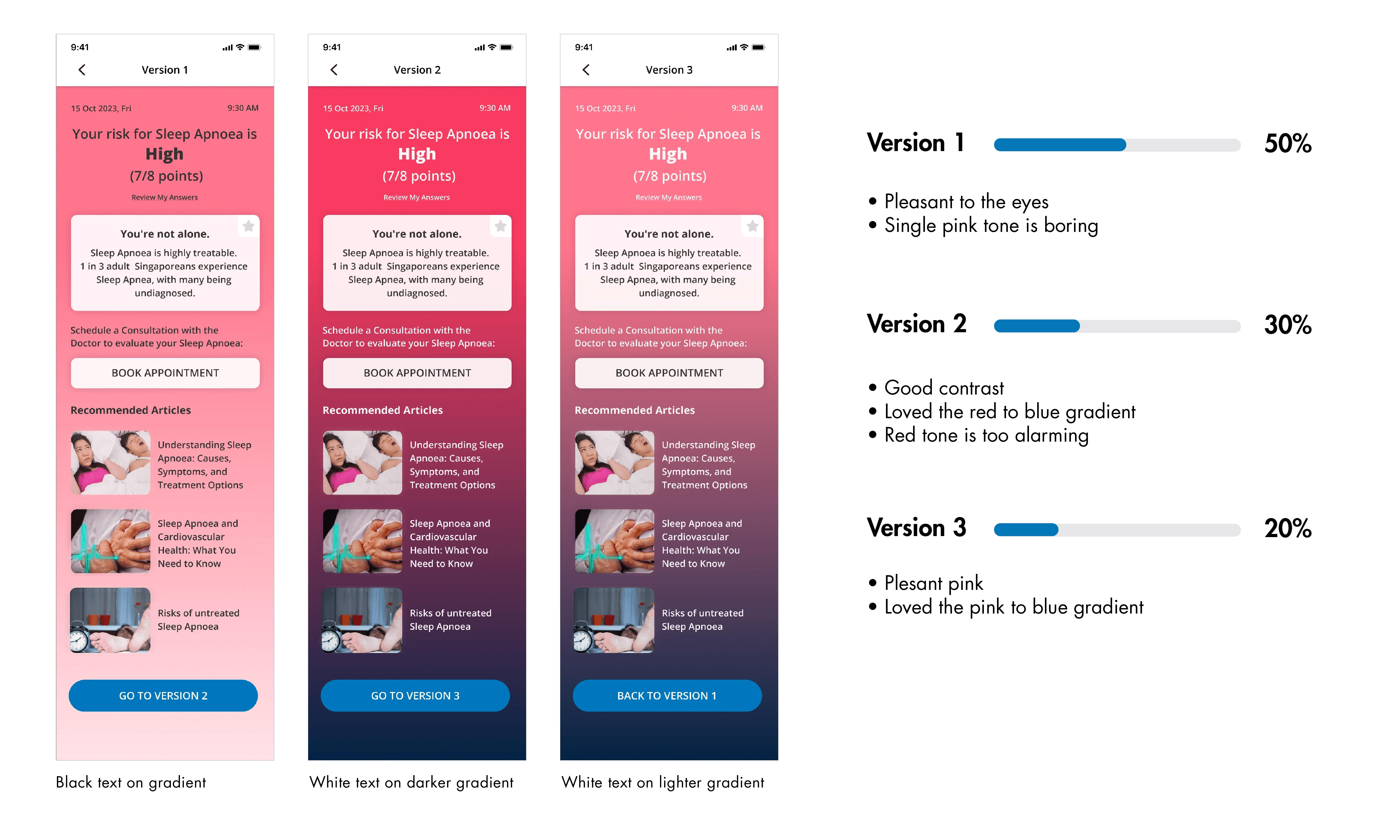
A majority of users chose Version 1 due to the pleasant pink and commented that Version 2 had great contrast. The team decided to move forward with Version 2 but refined the red tone to be less alarming to adhere to the sleep aesthetic.
Final design launched
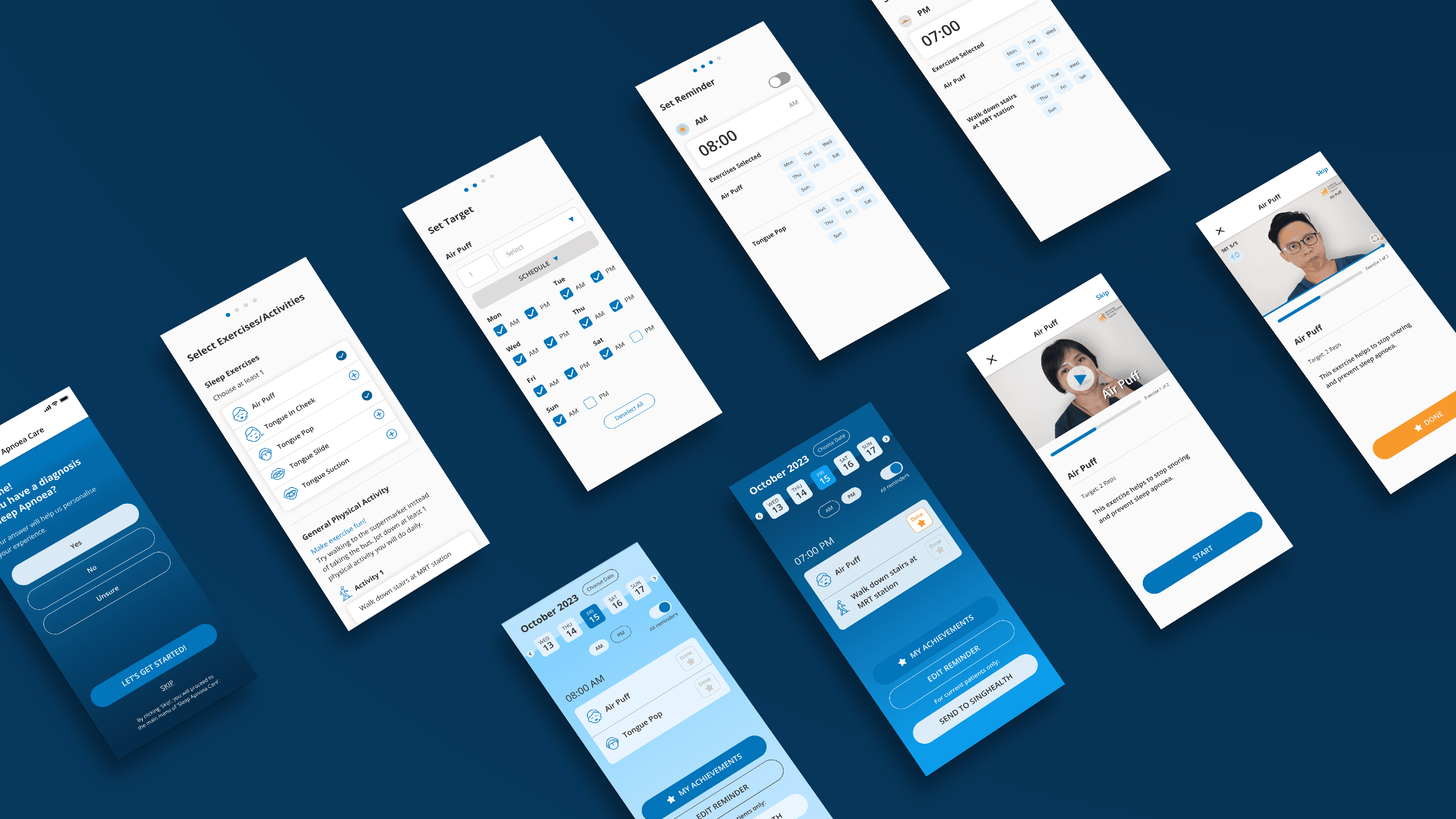
The final design launched consisted of Sleep apnoea risk test where first time users can identify their risk through a series of questions. For diagnosed users, they will be directed to an exercise and activities tracker to help improve their sleep quality over time.